
What Is a Bee Swarm?
Serving Las Vegas | Henderson | North Las Vegas
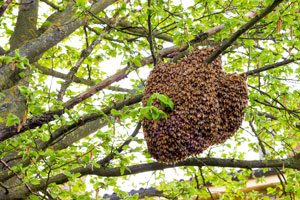
Bee swarms are an important part of bee biology. It’s a natural event where part of an existing colony leaves the nest to create a new nest, usually because the current nest is too large and ready for expansion. When you picture a “bee swarm,” you might picture a cloud of angry bees ready to sting, but that’s not technically accurate.
In reality, a swarm is simply the bees’ way of moving to a new house.
Why Do Bees Swarm?
Bees swarm to start a new colony. When a nest has run out of room to expand, the hive sends out scouts to find new locations for a nest.
The phrase “a swarm of bees” has been used to describe a large group of bees attacking, but that’s not technically correct. A “swarm” should only refer to a group of bees leaving a nest to establish a new colony.
Stages of a Bee Swarm
There are four distinct stages to a bee swarm:
- Swarm fever: When the hive gets too crowded, the old queen’s “Queen Mandibular Pheromone” (the chemical “scent” that keeps the hive orderly) is unable to reach all the bees. This triggers the instinct to split. The worker bees start raising a new queen. Just before she hatches, the old queen takes about half of the worker bees – which run in the thousands – and leaves the hive.
- Bivouacking: The swarm cluster will find a staging area where they can rest and evaluate new nesting sites. The bees vibrate their wing muscles around the queen, keeping her at the perfect warm temperature, regardless of the surrounding air temperature.
- Scouting: Scout bees fly around looking for new nesting locations, then return and do a “waggle” dance to communicate the location and quality of the sites they found. The bees will then “vote” for a new location. When they reach a decision via “quorum,” all of the bees will fly off at the same time.
- Final departure: Once in the air, the scouts will lead the way to the new nesting location, and all of the remaining disoriented worker bees will follow.
Ready to Schedule your Free Bee Removal Estimate?
We’ll call you right back, in 30 minutes or less. Just fill in your info below!
Are Bee Swarms Dangerous?
They can be, which is why you should keep your distance in most cases. Honeybee swarms in other parts of the country are usually docile, but there’s a complicating factor with the bees here in the Las Vegas Valley. Most of the bees in our region have Africanized honeybee genetics, which makes them more aggressive than your usual honeybees in other areas.
Bee swarms can be surprisingly docile because, before they leave the old nest, they gorge themselves on honey to give them energy for the impending relocation. As a result, they’re literally too full to attack. Their bodies are too stuffed, and their bellies too distended – they’re physically unable to curve their abdomens so their stingers are in a ready position.
Additionally, while they’re in a swarm, they don’t have an actual nest to defend. No nest means no young, so they’re less territorial.
Can a Bee Swarm Become Aggressive?
When you picture a “bee swarm,” you might imagine a large group of angry bees ready to sting, but this is not accurate.
Technically, bees only “swarm” as part of the “colony fission” (creating a new colony from an old one) process. They can become agitated and try to sting, but they are unlikely to go out of their way to attack you. If you see a swarm, keep a safe and respectful distance.
What Types of Bees Swarm?
Honeybees. Swarming is known as a honeybee behavior. Bumblebees don’t swarm, as most of a colony dies off every winter, leaving only the queen to establish a new one. Carpenter bees don’t swarm either; they’re mostly solitary.
Africanized bees are technically honeybees, and they love to swarm. They are considered “super swarmers” because they split off their colonies as often as six to ten times per year.
| Bee Type | Does it Swarm? | What you’re seeing… |
| Honey Bee | Yes | An actual swarm – a reproductive split of thousands of bees. |
| Bumble Bee | No | Mating drones or new workers orienting to the nest. |
| Carpenter Bee | No | A single territorial male hovering near his “wood” home. |
What Should I Do If I See a Bee Swarm on My Property?
If you see a swarm, do not disturb them if possible. They won’t attack you unless provoked or disturbed, and given the benefits of their pollination, it’s in everyone’s best interests that they establish a new hive. They’ll move off in a day or so.
If you can’t wait or the bees are creating a dangerous situation for you or a loved one, call your local beekeeper’s association or a local pest control company that provides safe and ethical bee removal. They can remove the swarm safely.
How Many Bees Are in a Swarm?
 Up to 60% of a bee colony! The actual number of bees can range from two or three thousand to 20-30 thousand, depending on the size of the nest.
How Far Do Bee Swarms Travel?
Bee swarms typically stay relatively close to home. This is because flying takes a lot of energy, and they only have a finite amount. Additionally, bees prefer to stay in areas they already know.
- When they first pour out of the existing nest to bivouac, they typically don’t go more than 10 to 100 meters. So, if you see a bee swarm bivouacking on your property, it’s a good bet they probably came from a neighbor’s property (or even your own!)
- They typically choose a new nesting site within half a mile of the bivouac. Their preference is to stay close, but they’re willing to travel up to two or three miles if they can’t find a suitable location nearby. In rare instances, they may fly up to five miles or so to a new nesting site.
What Do I Do If a Bee Swarm Attacks Me?
If bees attack you, cover your head and neck with clothing if possible. Run as quickly as you can, and don’t swat. Hitting bees will only make them more aggressive and determined to defend themselves.
Can You Prevent Bees from Swarming on Your Property?
In general, bees will fly wherever they want to go, but you can make your property less appealing to bees looking to bivouac. Here’s what we recommend:
- Seal gaps: Caulk or mesh any exterior holes larger than ¼” in your siding, soffits, and roofline.
- Screen vents: Use fine window screening to cover attic, crawlspace, and chimney openings.
- Remove old wax: If you’ve had bees before, thoroughly scrub away old honeycomb; the scent is a “vacancy” sign for new scouts.
- Fill cavities: Keep lids tight on irrigation boxes and BBQ grills, or fill empty outdoor voids with insulation to remove nesting space.
- Use natural repellents: Spray peppermint or eucalyptus essential oils around doorways or areas where you want to discourage scouts.
Questions About Bee Swarms in Las Vegas?
If you’re dealing with a swarm or have questions, give us a call! Our local bee experts are here to give you the information you need, and if you need safe and ethical bee removal, we can help with that too.