
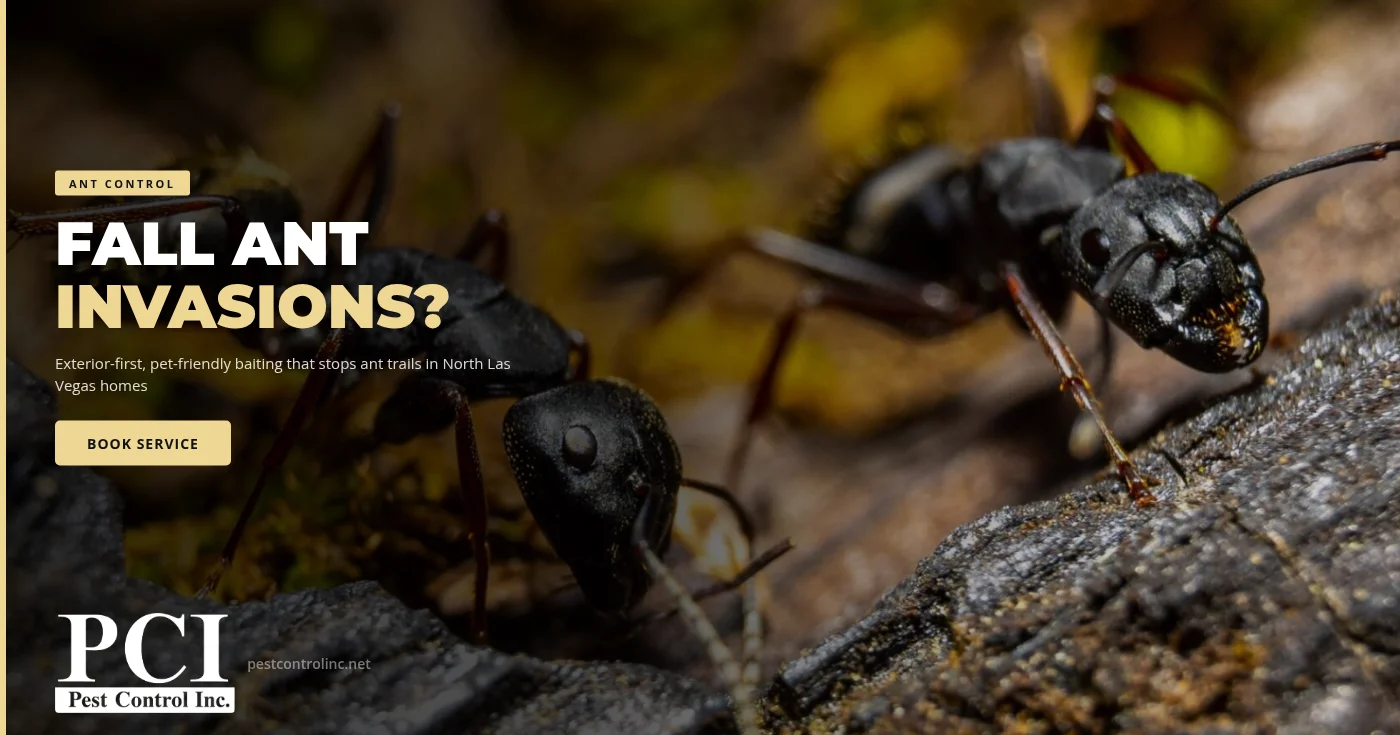
The first cool November evening brings relief from the desert heat. In a lot of homes, it also brings a line of ants marching across the kitchen counter or circling the bathroom sink. If you’re researching ant control in North Las Vegas, you’re in good company. Fall is one of the busiest stretches of the year for indoor ant activity, and the timing isn’t random.
Here at Pest Control Inc, we’re a 3-generation, family-owned company that has served North Las Vegas and all of Clark County since 1996. Below, we explain why ants trail into kitchens and bathrooms as nights cool and watering schedules change. We also cover which species are most common, why store-bought sprays backfire and how exterior-first baiting stops trails at the source.
Why Ants Move Indoors in North Las Vegas When November Nights Cool
Ants are cold-blooded, so their activity rises and falls with temperature. In November, overnight lows across the valley typically dip into the 40s, while afternoons can still reach the 60s or low 70s. On those warm afternoons, workers keep foraging. After sunset, colonies look for steady warmth. The slab under your home, the walls near your water heater and the space behind your dishwasher all hold heat far longer than open desert soil.
Colonies are also stocking up. Many species keep feeding through fall to support their queens and brood heading into winter, so scouts are hunting for sugar, grease and protein. One successful scout lays a pheromone trail, and within hours dozens of ants can follow it straight to your pantry.
Do Ants Go Dormant in the Valley?
Not completely. In colder climates, colonies shut down for months. Winters here are mild enough that many ants simply slow down and keep foraging on warmer days. That’s why fall trails often continue into December and January if the colony isn’t addressed. Ants in the kitchen in fall usually signal an established colony nearby, not a few stragglers.
Common Fall Ant Species Found in North Las Vegas Homes
Getting the species right shapes the treatment, because different ants want different foods and nest in different places. The mix varies by neighborhood, landscaping and moisture, but these are the species we most often see across Southern Nevada:
- Argentine ants: Small brown ants that form huge, moisture-loving colonies with many queens. They’re known for long, steady trails along baseboards and counters.
- Odorous house ants: Tiny dark ants that smell like rotten coconut when crushed. They love sweets and often nest in wall voids near plumbing.
- Pavement ants: Dark ants that nest under slabs, sidewalks and pavers, often leaving small piles of sand near cracks.
- Fire ants: Southern fire ants and native fire ants can appear in yards and along foundations. They sting, so avoid disturbing their mounds.
- Harvester ants: Larger reddish ants that build cleared mounds in sunny areas. They mostly stay outdoors but can deliver a painful sting.
- Pharaoh ants: Very small, yellowish ants found more often in larger or multi-unit buildings, where they spread between units.
Not sure what you have? Snap a close-up photo or save a few ants in a sealed bag. Our technicians confirm the species during every inspection so the treatment fits the colony.
How Seasonal Irrigation Changes Push Ant Colonies Toward Your Foundation
This is the piece most homeowners never connect. The Southern Nevada Water Authority sets mandatory landscape watering days by season. Under its seasonal watering schedule, fall typically allows up to three days a week. Winter usually begins around November 1 and drops that to one assigned day a week. Check the SNWA site for your watering group and current dates, since the rules can change.
Less water is great for conservation, but it changes conditions in your yard fast. Desert landscaping often runs drip emitters right beside the house, and all summer, colonies settle into that moist soil along the slab. When the drip runs less often, the soil dries out. Those colonies don’t leave. They shift along the foundation looking for moisture.
Where Thirsty Ants Head Next
- Leaky hose bibs and irrigation valves
- AC condensate lines
- Kitchen sinks, dishwashers and refrigerator lines
- Bathroom tubs, showers and toilet bases
This is a well-understood pattern in ant behavior rather than a formal local study. It does match what we see in the field: when watering drops, indoor ant calls tend to climb.
Where Ants Get In: Kitchens, Bathrooms, Slab Cracks and Door Thresholds
Most homes in the area sit on concrete slabs, and ants are experts at finding the smallest gaps around them. Knowing the usual entry points helps you spot trouble early.
Kitchens
Kitchens offer food, water and warmth in one place. Ants follow plumbing penetrations under the sink, travel behind dishwashers and trail along countertops toward crumbs, pet food and sticky spills. Holiday baking and Thanksgiving leftovers give scouts even more to find.
Bathrooms
Ants in a bathroom with no food in sight confuse a lot of people. The draw is water. Gaps where tub drains and toilet lines pass through the slab create a direct path from the soil to a steady moisture source.
Slab Cracks and Expansion Joints
Expansion joints, settlement cracks and gaps where the slab meets drywall let ants move straight up from nests below. Tiny piles of sand along baseboards are a common clue.
Door Thresholds and Windows
Worn weatherstripping, gaps under sliding doors and unsealed window frames are easy ways in. This is especially true on the shaded side of the house, where plantings hold moisture longest.
Why Store-Bought Sprays Often Make Ant Trails Worse
When you spot a line of ants, grabbing a can of spray feels like the obvious move. The trouble is that you only reach the workers you can see, which is often a small fraction of the colony. The queens, eggs and larvae stay tucked away in the nest and keep producing replacements.
It can get worse with species like Argentine and pharaoh ants, which have many queens per colony. The University of California Statewide IPM Program’s Pest Notes on ants explains that disturbing these colonies with repellent sprays can cause them to split into new nests, a process called budding. Instead of one trail, you may end up with several in different rooms.
Sprays can also undermine baits. UC IPM advises against spraying near bait placements, because repellents drive ants away from the very product designed to reach the nest. Slow-acting baits work differently. Foragers carry them home and share them throughout the colony, queens included.
What to Do Instead
- Wipe trails with soapy water to remove the scent trail
- Seal food and clean up crumbs and spills
- Skip sprays if baits are already in place
- Call a licensed professional if trails keep returning
PCI’s Exterior-First, Health Conscious Approach to Fall Ant Control
Our Health Conscious Service Program is built on Integrated Pest Management, the same outside-first approach university extension programs recommend. Rather than treating every room of your home, we stop ants where they live, along the foundation. We use EPA-registered, low-impact baits and gels for effective, pet-friendly ant control with minimal chemical exposure.
What a Fall Ant Visit Looks Like
- Inspection and identification: We follow the trails, locate nests where possible and confirm the species.
- Exterior ant baiting: We place baits along foundation lines, entry points and active trails so workers carry them back to the colony.
- Targeted interior gels: When needed, we make small placements in cracks and voids, away from food prep areas.
- Recommendations: We point out leaks, moisture sources and gaps that are inviting ants in.
- Documentation: You get a record of what we found and applied on every visit.
Our technicians are drug tested and background checked, and every service is backed by our money-back guarantee. Fall’s cooler, damper conditions also bring out other pests, so we can check for earwigs during the same visit. It’s the Las Vegas ant control approach our family has refined over three generations.
Fall Prevention Tips for North Las Vegas Homeowners and 55+ Communities
A few simple habits make your home much less inviting to ants this season:
- Fix leaks quickly: Repair dripping faucets, hose bibs and irrigation valves, and check AC condensate lines.
- Adjust drip emitters: Where possible, point emitters away from the slab so moisture doesn’t pool against the foundation.
- Trim plants back: Keep shrubs, groundcover and branches from touching walls or the roofline, since they act as bridges.
- Seal gaps: Caulk around plumbing penetrations, baseboards and window frames, and replace worn door sweeps.
- Store food tightly: Use sealed containers for sugar, flour, cereal and pet food, especially during holiday baking.
- Clean as you go: Wipe counters nightly and rinse recyclables before storing them.
Tips for 55+ and HOA Communities
Many of our longtime clients live in 55+ communities, including neighborhoods around Aliante. For homeowners with pets or visiting grandchildren, our family-friendly, low-impact approach offers real peace of mind. Ant colonies don’t respect property lines, so HOAs and property managers benefit from coordinating exterior treatments across shared walls and common areas. A regular bi-monthly or monthly plan keeps a protective treatment zone in place before fall trails start.
Frequently Asked Questions About Fall Ant Control in North Las Vegas
Why are ants in my bathroom when there’s no food there?
They’re after water. As yards dry out under the winter watering schedule, ants follow plumbing gaps in the slab toward tubs, showers and toilet bases. Fixing drips and sealing gaps around pipes helps. Baiting the colony outside is what actually stops the trail.
Will spraying the ant trail get rid of the colony?
Usually not. Sprays kill the workers you see but miss the queens, and with multi-queen species they can cause colonies to split into more nests. Wiping the trail with soapy water and using baits is far more effective.
How long does ant bait take to work?
Many people notice fewer ants within a few days. Full colony control often takes one to two weeks, depending on the species and the size of the colony. Seeing more ants at the bait at first is normal, because it means they’re feeding and carrying it home.
Is there pet-friendly ant control in North Las Vegas?
Yes. Our Health Conscious Service Program relies on EPA-registered, low-impact baits and gels applied exterior-first, which keeps chemical exposure inside your home to a minimum. We place products thoughtfully, away from pet bowls and play areas, and your technician will walk you through every placement so you have full peace of mind.
Get Guaranteed Ant Control in North Las Vegas This Fall
Fall ant trails are frustrating, but they’re predictable, and that makes them stoppable. Cooler nights, drier yards and busy holiday kitchens all pull colonies indoors. The fix starts outside, with exterior-first baiting that reaches the nest.
Here at PCI, we’ve provided licensed, guaranteed pest control since 1996 as a 3-generation, family-owned company. We serve the Las Vegas Valley, Henderson and all of Clark County. We call back in 30 minutes or less during business hours and offer same-day service when available. If you’re ready for eco-friendly ant control in North Las Vegas backed by our money-back guarantee, contact Pest Control Inc today to schedule your visit.
How can I stop ants from trailing into my kitchen and bathroom this fall?
When nights cool and watering days drop, ants that spent the summer in your yard start following plumbing gaps and door thresholds indoors. Here at Pest Control Inc, we stop those trails where they start, outside along your foundation, instead of chasing them across your countertops.
Our Health Conscious Service Program uses an Integrated Pest Management approach built around:
- Exterior-first baiting along foundations, entry points and active trails, so workers carry bait back to the colony
- EPA-registered, low-impact baits and gels for pet-friendly, family-friendly protection
- Species identification, so treatment matches the ants you actually have
- Documentation on every visit, so you always know what we found and applied
- A money-back guarantee on every service
We’re a 3-generation, family-owned company that has served the Las Vegas Valley since 1996. We’re licensed by the Nevada Department of Agriculture and proud members of the NPMA. Our technicians are drug tested and background checked. We return calls in 30 minutes or less during business hours and offer same-day service when available.
Want to know why ants show up in kitchens and bathrooms every November, and why store-bought sprays can make things worse? Read our full guide to fall ant control in North Las Vegas.